How Recruitment Process Outsourcing Can Ease COVID19 Staffing Stress

In a nutshell, Recruitment Process Outsourcing (RPO) means an employer transfers all or part of its recruitment processes to a staffing company. With RPO, even a company with limited HR and recruiting resources can efficiently recruit qualified candidates to fill open positions. It is a cost-effective and efficient way to “add” professional recruiting to your staff.
How does this help an employer with responding to COVID19, ever-changing regulations, and the need to be flexible and empathetic with its workforce? The RPO business model is agile, meaning businesses that partner with recruiting experts can adapt more easily to disruptions and uncertainty.
5 Ways RPO Can Boost Recruiting Success During the Pandemic
- Shortens the time to hire. An RPO provider takes over the time-consuming task of sourcing qualified candidates to fill open positions. Vacant jobs means lost opportunities. Also, companies can suffer reputational damage if they can’t manage their customers and clients due to lack of personnel. RPO allows a company to focus on the regular day-to-day business tasks, while the RPO provider finds the candidates to fill open positions quickly.
- Makes recruiting flexible. Business closures and re-openings, changing health mandates, and the need for employers to be sensitive and empathetic to team members have made flexibility essential. RPO allows a business to scale up or down quickly based on needs of the company.
- Decreases costs. Data from the Aberdeen Group showed companies that used an RPO provider for their hiring functions reduced their overall cost-per-hire by 20 percent. The RPO provider becomes the consultative, customizable recruiting force for the company, and can also manage the time consuming tasks of onboarding.
- Improves the quality of candidates. Recruiting experts know how to tap into huge candidate networks to find the best available talent. After all, this is what they do all day. With RPO, a trained and skilled recruiter, or a team of them, can become an extension of your team ensuring you recruit and hire candidates with the skills and qualifications needed.
- Saves time. Recruiters at staffing companies like Amtec live the hiring process on a daily basis. Recruiters are using remote tools for interviewing candidates to find the right talent for your team and also the right fit for your culture. Virtual interviews have been part of a recruiters tool kit long before the pandemic. Also, recruiters know all the steps to get team members onboarded and working very quickly,
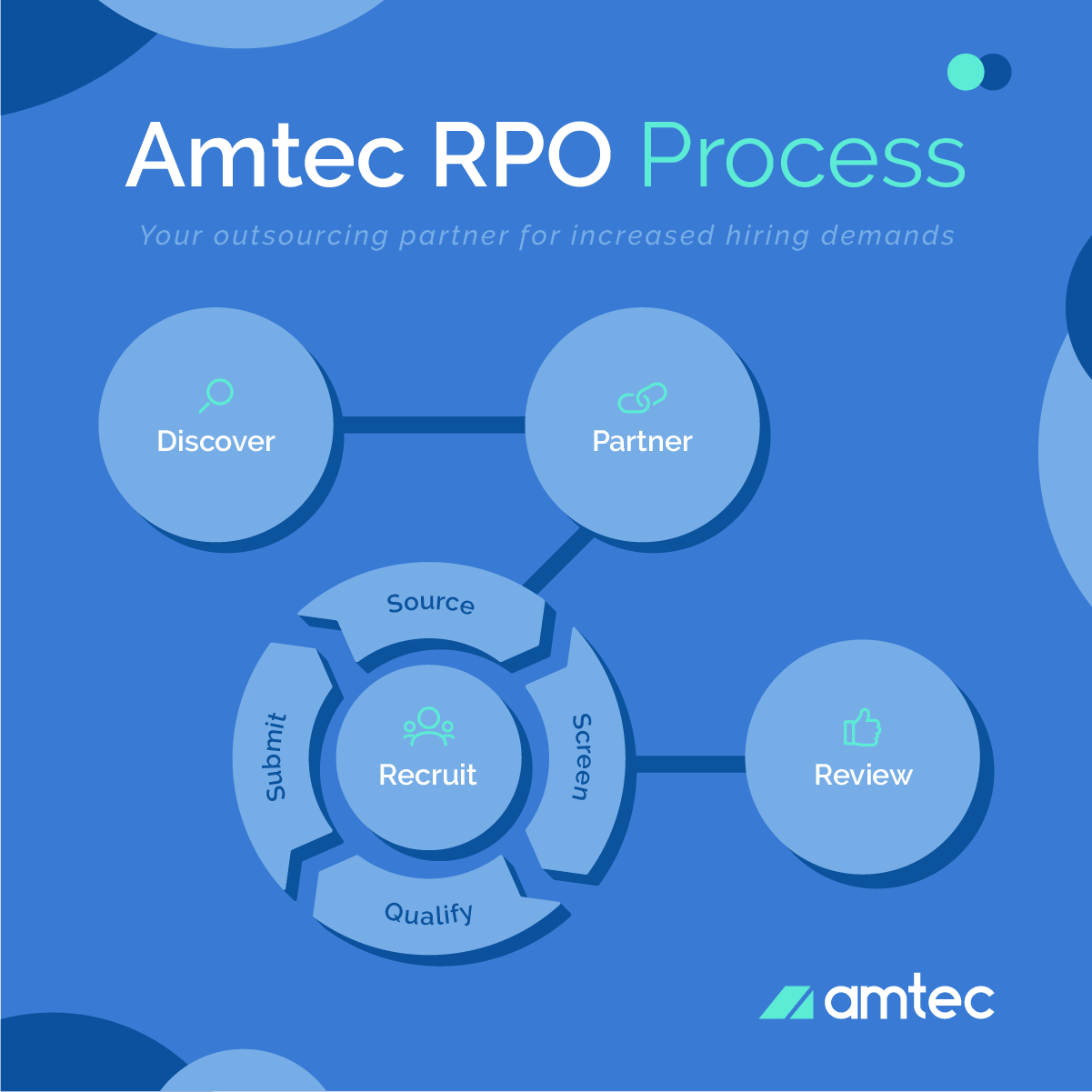
How Does RPO Work?
When a company uses an RPO provider, such as Amtec, the employee essentially serves as an extension of the company’s human resources department.
What Types of Companies Benefit From RPO Services?
Typically, companies that have multiple openings of the same kind that change throughout the year benefit the most from RPO services, for example retail stores during the Holidays. However, COVID19 has created unique challenges for companies in healthcare, manufacturing and interestingly, the mortgage industry.
At Amtec, we’ve been offering our customers the opportunity to hire with RPO since 2008. Depending upon your need, it can include any or all of these services:
- Process management
- Hiring strategy development
- Position profiles and description development
- Sourcing and recruiting
- Screening and interviewing
- Hiring
- Offer documentation and administration
- New hire processing, background/reference checks, and on-boarding
Outsourcing the specialized and time-consuming tasks of recruiting can free up human and financial resources, and provide a deep pool of well-qualified candidates to choose from when reopening safely happens, hopefully sometime soon.