
How to Conduct an Exit Interview That Produces Real Insight

Most companies conduct exit interviews. Far fewer get useful information from them. The process itself isn’t complicated, but getting honest answers, documenting them systematically, and actually changing something as a result? That’s where organizations fall short. This guide covers how to conduct an exit interview that moves beyond a checkbox exercise and becomes a genuine tool for improving retention and hiring.
Why Most Exit Interviews Underperform
Exit interviews suffer from a fundamental problem: departing employees have little incentive to be fully honest and strong reasons to self-censor. When someone has already accepted another offer, their priority is leaving on good terms, not providing candid organizational feedback.
This creates what psychologists call social desirability bias. Employees default to safe, palatable reasons for leaving (“I found a better opportunity” or “It was time for a change”) rather than the harder truths (“My manager was terrible” or “The pay was insulting for what was expected”). The result is that most organizations collect data that sounds reasonable but obscures the real drivers of turnover.
That means a feedback loop that confirms nothing and changes nothing. The rest of this guide addresses how to break that cycle by designing the interview for honesty, asking the right questions, and building a system that converts responses into action.
Who Should Conduct the Exit Interview (and Why It Matters)
The universal best practice is straightforward: the departing employee’s direct manager should not conduct the interview. People won’t critique their boss to their boss’s face, especially when they may need a reference.
But the question of who should conduct it deserves thought. Here are the realistic options:
- HR representative: The most common choice. Advantages include process consistency and institutional knowledge. The downside is that employees may view HR as aligned with management, limiting candor.
- Skip-level leader: A senior leader outside the employee’s direct chain can signal that the organization takes the conversation seriously. This works well for mid-level departures but can feel intimidating for junior employees.
- Third-party interviewer: External vendors or consultants remove internal politics entirely. This is worth the investment for high-turnover roles, senior departures, or situations where feedback consistently implicates management. Companies like PeopleElement specialize in this type of outsourced exit interview service.
One scenario competitors rarely address: when the departing worker was placed through a staffing firm. In those cases, both the client company and the staffing partner may benefit from conducting separate conversations. The staffing firm can capture feedback about the work environment that informs future placements, while the employer gathers operational insights.
How to Set Up the Interview for Honest Responses
Timing, framing, and format all affect whether you get real answers or polished deflections.
Timing: Schedule the interview during the employee’s final week but not on their last day. By that point, they’re mentally checked out and focused on wrapping up. Give at least a few days’ notice so the conversation doesn’t feel like an ambush.
Format flexibility: Offer options: in-person, video call, or phone. For remote or hybrid employees, video is often the most practical choice. Don’t default to in-person if the employee works from a different location.
Framing matters: Explain specifically how their feedback will be used. Vague promises of confidentiality ring hollow. Instead, be direct: “Your responses will be anonymized and reviewed in aggregate with other exit data. Individual names won’t be attached to specific comments shared with leadership.” If there are limits to confidentiality (such as reports of illegal conduct), say so upfront.
The delayed exit interview: Consider following up 30 to 60 days after the employee’s departure. Once someone is settled in a new role and the emotional stakes have dropped, they’re often more willing to share candid feedback. This tactic is underused but consistently produces more actionable data than day-of conversations.
What Questions to Ask (and What They Actually Reveal)
A strong exit interview uses eight to ten carefully chosen questions rather than a sprawling list of twenty. Each question should be designed to surface a specific category of insight.
Reason for Leaving
“What prompted you to start looking for a new role?”
This surfaces the trigger event rather than the polished explanation. Listen for whether it was a single incident (a denied promotion, a policy change) or accumulated frustration.
“What does your new role offer that this one didn’t?”
This reframes the departure as a comparison rather than a complaint, making people more comfortable being specific about gaps.
Manager Effectiveness
“How would you describe your relationship with your direct manager?”
Open-ended and non-leading. Pay attention to what they don’t say as much as what they do.
“Did you receive regular, useful feedback on your performance?”
This is more specific than asking about management quality and often reveals whether supervisors are actually developing their teams.
Role Clarity and Growth
“If you could change one thing about how your role was set up from day one, what would it be?”
This question surfaces onboarding and job design problems that accumulate into dissatisfaction.
Compensation and Benefits
“What did you learn in your job search that surprised you about what other companies offer?”
Rather than asking “Were you fairly compensated?” (which invites a yes/no answer), this question reveals market intelligence about where your total compensation package falls short.
Culture and Team Dynamics
“Would you recommend this company to a friend looking for work? Why or why not?”
The “why not” follow-up is essential. A hesitant “yes” with qualifiers is often more revealing than a flat “no.”
Retention Opportunity
“Was there anything the company could have done to keep you?”
Ask this directly. Sometimes the answer is genuinely “no, it was just time.” But when someone names a specific, fixable issue, you have actionable intelligence.
How to Handle Sensitive Feedback
Sometimes exit interview responses implicate a specific manager or senior leader. This is where many HR teams freeze, and that hesitation can undermine the entire program.
Document carefully. Record what was said using the employee’s words, not your interpretation. Avoid editorializing in your notes. Store exit interview documentation separately from the employee’s personnel file to reduce legal exposure.
Distinguish patterns from isolated complaints. A single employee criticizing a manager may reflect a personality conflict. Three employees in twelve months citing the same leader’s behavior is a pattern that demands investigation. Track feedback by department and manager over time so patterns become visible.
Escalate appropriately. When feedback implicates senior leadership, HR must determine whether the issue warrants involvement from the executive team, legal counsel, or both. This is uncomfortable but necessary. If employees learn that their feedback was ignored or shared inappropriately, future exit interviews become useless.
Turning Exit Interview Data Into Action
This is where most organizations fail. They conduct the interviews, file the notes, and move on. Breaking this pattern requires a simple system.
Log and categorize every response. Even without sophisticated HR software, a shared spreadsheet works. Create columns for departure date, department, manager, tenure, and tagged themes (compensation, management, growth, culture, workload). Platforms like BambooHR, Workday, or even a structured Google Form can automate parts of this.
Look for patterns, not just individual stories. Review exit data quarterly. The questions to ask: Are the same themes appearing across departments? Is one manager cited repeatedly? Are newer employees leaving for different reasons than tenured ones?
Set threshold triggers. When three or more departing employees cite the same issue within a twelve-month period, that stops being anecdotal and starts being a systemic problem. Define these thresholds in advance so action isn’t left to subjective judgment.
Assign ownership. Someone must be accountable for follow-through. Typically, HR owns the data analysis, the department leader owns operational changes, and senior leadership owns structural decisions like compensation adjustments or management changes.
Close the loop to hiring. Exit data should directly inform how you fill the vacated role. If departing employees consistently cite unclear expectations, rewrite the job description. If they cite lack of growth, adjust interview questions for replacements to assess candidates’ development expectations. Feed findings into your workforce planning strategy so you’re not just replacing headcount but building retention strategies that address the root causes of turnover.
Connect exit data with engagement surveys. Exit interviews tell you why people leave. Engagement surveys tell you how current employees feel. Gallup’s research on employee engagement consistently shows that manager quality is the single largest factor in team engagement, which is exactly the kind of finding exit interviews can validate or challenge. When both data sources point to the same issue, you have a strong evidence base for action.
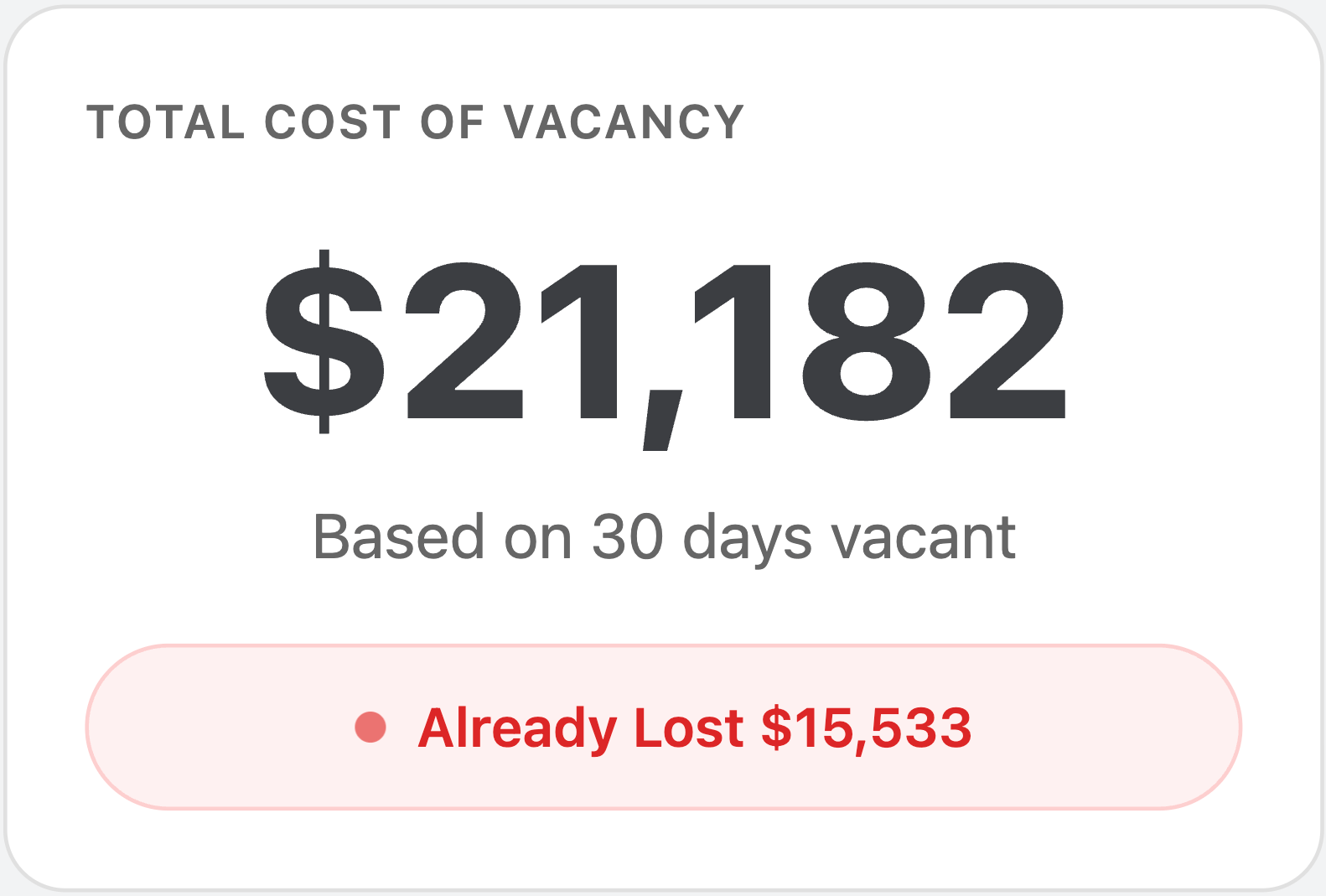
When turnover patterns persist, the cost of each unfilled position compounds. Knowing that number can help make the case for the organizational changes your exit data is pointing toward.
Exit Interviews as Part of a Bigger Listening Strategy
Exit interviews are inherently reactive. By the time you’re conducting one, the employee has already decided to leave. The real power comes from embedding exit interviews within a broader employee listening lifecycle.
Onboarding check-ins (at 30, 60, and 90 days) catch early misalignments before they fester. Stay interviews, conducted with current employees you want to retain, surface problems while there’s still time to fix them. Exit interviews capture what you missed. Together, these three touchpoints create a continuous feedback system rather than a single data point collected at the worst possible moment.
There’s also a relationship benefit. A respectful, well-conducted exit interview leaves the door open for future re-engagement. Former employees who felt heard during their departure are more likely to return. If your organization is open to rehires, having interview questions for boomerang employees ready is a smart complement to a strong exit interview program.
The goal of improving how you conduct exit interviews isn’t to perfect the exit process. It’s to learn enough from departures that, over time, you need fewer of them.
Our Services
Industries We Serve
Related Posts
View all posts-
EmployersCareer Seekers
The State of the U.S. Aerospace & Defense Workforce (2026 Benchmark Report)
U.S. aerospace and defense workforce statistics from BLS, AIA, McKinsey, PwC, and Deloitte, with employment and labor trend insights for 2026.
-
Career Seekers
8 Professional Development Goals Every Job Seeker Needs
Professional development goals that make you more hireable. 8 goals job seekers can start today.
-
Career Seekers
12 Informational Interview Questions You Should Ask
Informational interview questions worth asking, what to listen for, and how to turn 30 minutes into a real professional connection.